From Body Therapy to Web Design: Why the Unconventional Path Actually Worked
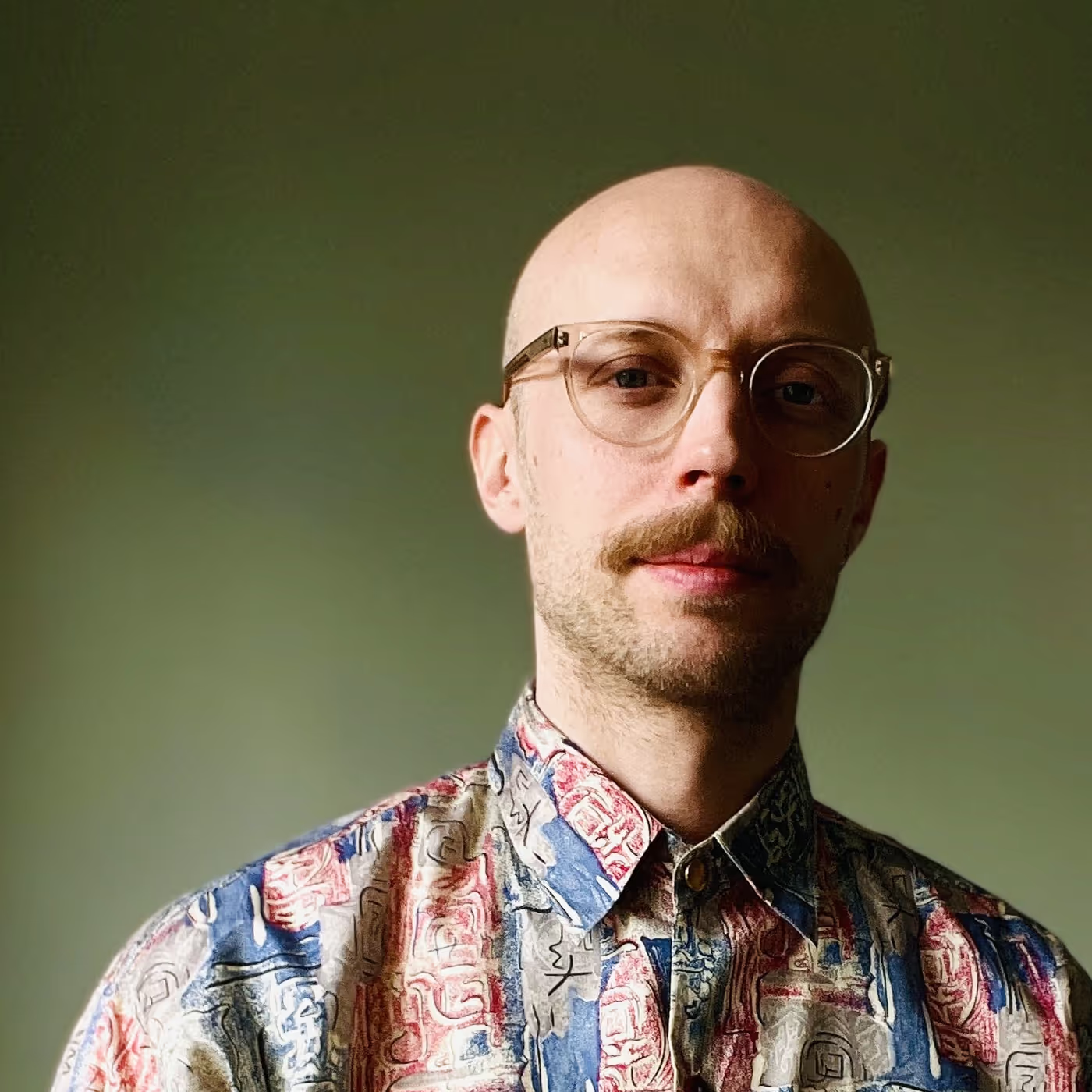
There was a morning where I yelled at my daughter for being slow getting ready for school, and I remember sitting with that afterwards and realising that something had to change. Not just slow down, not just take a break -- actually stop. I had been working as a body therapist for years, helping people who came to me with stress, anxiety, and depression, and I genuinely loved what I did. Using a combination of advanced massage techniques and conversation, I would work with clients across multiple sessions to help them understand what was actually beneath their symptoms -- because stress and anxiety almost always have underlying reasons that we're not fully aware of. Most of my clients felt better. But they also needed to keep doing the work between sessions, meditating or stretching or just showing up for themselves, and I needed to keep finding clients, which I was struggling to do consistently.
The financial instability built up slowly over time, and at some point I started feeling the stress myself, which is a strange thing to experience when your whole practice is built around helping others manage exactly that. And then that morning happened with my daughter, and that was it. I decided I would stop doing body therapy, and a couple of months later I did.
Figuring Out What Was Next
After I stopped, I spent a good while trying to figure out what I actually wanted to do. Music had always been part of my life and was never going anywhere, but I needed something that could also sustain me financially. I had always been drawn to design and computers, and I had tried to learn how to build websites a few times before without it really sticking. Then I came across UX design -- the practice of designing products around the people who use them -- and something about it immediately clicked. I started reading everything I could find, Don Norman, Steve Krug's "Don't Make Me Think," and the more I read the more I understood why design matters and how much of it is about understanding people rather than just making things look nice.
I started with the Google UX Design Certificate, which took me about six months while I was also going deep into the books. After that I wanted to take it more seriously, so I invested in a bootcamp through CareerFoundry, which took about a year and came with both a mentor and a tutor. Having real people on the other end, people who would look at my assignments and tell me honestly what was working and what wasn't, made a huge difference compared to just working through material on my own.
After I finished, I started applying for UX design jobs. I applied everywhere, all over the world, for a full year, and in that time I got one interview out of hundreds of applications. That was a hard year. But looking back, I think it also pushed me toward something I should have recognised much earlier -- that I am not built for a nine-to-five in a company, and that freelancing had been the obvious fit for me the whole time. It just took a year of rejection to make me stop resisting it.
Finding the Thing I Actually Loved
While I was studying UX design, I had been using Webflow on the side for about a year, and I kept coming back to it. There was something about actually building a website -- not wireframing it, not just prototyping in Figma, but making something real that worked in a browser -- that I found genuinely exciting in a way that UX work alone never quite gave me. I was not forcing myself to open Webflow. I wanted to.
So I invested in Flux Academy's Webflow masterclass and went all in. And after that I decided I would start my own studio and build Webflow websites for businesses. That was just over a year ago.
My first client was an NGO I found and cold-messaged on LinkedIn, asking whether they needed a new website. It turned out they didn't have one at all. My second came through a friend who needed a site for himself. Neither of them found me -- I went and found them, which felt right for someone who had spent years running their own practice and was used to making things happen rather than waiting.
What Body Therapy Still Teaches Me
One thing I did not expect when I made this transition was how much the body therapy work would stay with me, not as a memory but as an actual way of working with clients.
When people came to me with stress or anxiety, my job was never just to do the treatment and send them home. It was to help them figure out what was actually going on underneath -- because the symptoms on the surface are almost always pointing at something deeper that hasn't been named yet. What I have found is that building websites works in a similar way. Every client comes in with a brief, but the brief is rarely the whole picture. Some are embarrassed by their current site but haven't said it directly. Some are losing leads and are not sure why. Some are going through a rebrand because something has shifted in their business or in who they are, and the old site no longer reflects that.
The projects that go well are almost always the ones where I take the time to understand what is actually going on, not just what the client thinks they need, but what their business genuinely calls for. And I think that instinct -- the one that says look underneath the surface before you start fixing things -- came directly from years of doing exactly that kind of work with people.
I also learned early on in freelancing that building a website takes significantly longer than anyone initially thinks, including me. I cannot design and build a quality site in four weeks and do it well. Getting honest about time, with myself and with clients, has been one of the things that has made my projects work -- it is always better to set a realistic expectation and deliver on it than to promise something fast and spend the rest of the project catching up.
For Anyone Taking the Long Way Around
I did not come into web design the straightforward way. I came through body therapy, through music, through a year of UX study, through a year of rejection, and through a lot of time just figuring things out. Looking back, I do not think that path was a detour -- I think it shaped how I work and why my approach to client projects feels different to me than just executing a brief.
If you are somewhere in the middle of your own transition into freelance web design -- figuring out how to run projects, how to talk to clients, how to stay organised and keep things from going sideways -- the Solo Designer's Playbook is the guide I put together from my own process. It covers the full client journey from the moment a lead comes in to the day you hand the site over, written for solo designers who handle everything themselves.
Check out my work or get in touch.